

Key Takeaways
- Bifocal lenses hold two viewing zones, one for distance on top and one for near vision on the bottom.
- A visible line divides the two sections of the lens.
- Adults past 40 often reach for bifocals when close-up reading gets harder.
- Some children use bifocals to support eye teaming or to slow myopia.
- Progressive lenses offer a lineless option with near, middle, and far vision.
What Bifocal Glasses Really Are
You hold your phone at arm’s length just to read a text. Menus look blurry unless you push them away. Small print on a medicine bottle turns into a guessing game. These little moments add up, and the team at Forest City Optometry often links them to a change in how your eyes focus up close.
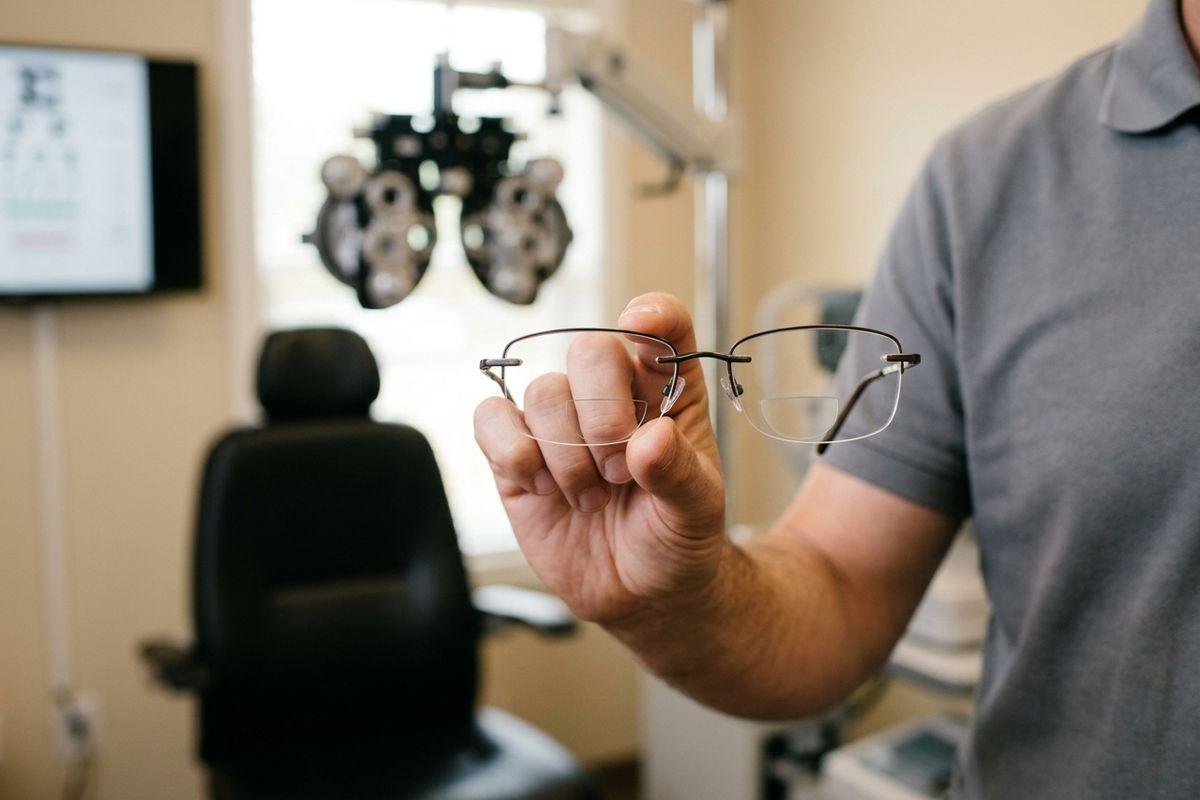
Bifocal glasses use one lens with two separate viewing areas, letting you see faraway objects through the top and close-up details through the bottom. That means you can look up to watch the road, then glance down to read a map, all with the same pair of glasses.
How Bifocal Lenses Work
Each bifocal lens splits into two parts. The larger top section helps you see things across the room or down the street. The smaller bottom section sharpens words and objects within arm’s reach.
A visible line sits between the two zones. You look through the top for distance and drop your gaze to the bottom for reading. Once your eyes learn the pattern, the switch starts to feel natural.
Who Needs Bifocal Glasses
Presbyopia After 40
The lens inside your eye gets stiffer as you age. Around your 40s, that stiffness makes close-up focus harder. You might notice trouble reading phones, books, and menus, especially in dim light.
Bifocals give your eyes the extra near-vision support they lose over time.
Focusing Support for Kids
Bifocals aren’t only for adults. Some children wear them when their eyes struggle to work together on near tasks.
- They can help with eye teaming issues during reading and schoolwork.
- They may slow myopia progression in certain children.
An eye exam can show whether this fits your child’s needs.
Types of Bifocal Lens Segments
The reading section comes in a few shapes, and each one changes how the lens looks and feels. Your daily habits help point you toward the right one.
- Flat top, sometimes called a D segment, gives a wide reading area with a straight top edge.
- Round segment blends more softly into the lens with a curved shape.
- Executive or Franklin style splits the whole lens across the middle for a large reading zone.
The team can walk you through each option during your visit.
Things to Consider Before You Choose Bifocals
Bifocals handle near and far well, but they leave out the middle range. Computer screens sit in that in-between zone, so they can look fuzzy through either section. You may also notice image jump, a small shift in what you see as your eyes cross the line. And that line stays visible on the lens.
Bifocals and Everyday Tasks
Driving takes a little practice. Keep your head level and let your eyes move to the reading zone only when you check the dashboard, not the road.
Watching TV works best through the top of the lens, so sit back and keep your chin up. Small head adjustments help you land in the right zone for each task.
Bifocals and Progressive Lenses
What Progressive Lenses Offer
Progressive lenses skip the visible line. Instead, the strength shifts smoothly from top to bottom.
That smooth change gives you near, middle, and far vision in one lens, which helps with screens, books, and driving all at once.
How the Team Helps You Decide
An eye exam measures how your eyes focus and where you spend most of your day. From there, the team matches lenses to your routine, whether you read for hours, drive often, or work at a computer. You leave with options that fit how you actually live, not a one-size guess.
Forest City Optometry in London, ON offers full-scope care, from adult and senior exams to myopia control for kids. Book your eye exam online today and let the team help you find lenses that suit your vision.