
Sore, tired eyes at the end of a screen-heavy day are common enough that most people stop asking questions about them. They usually settle on their own, so most people never think to mention it at an adult and senior eye exam.
Eye strain usually eases within a few minutes to a few hours after you stop the activity, though it can linger for days when the habits behind it don’t change. Anything past that is worth looking into, since dry eye and an out-of-date prescription can both feel like ordinary tiredness.
What Eye Strain Feels Like
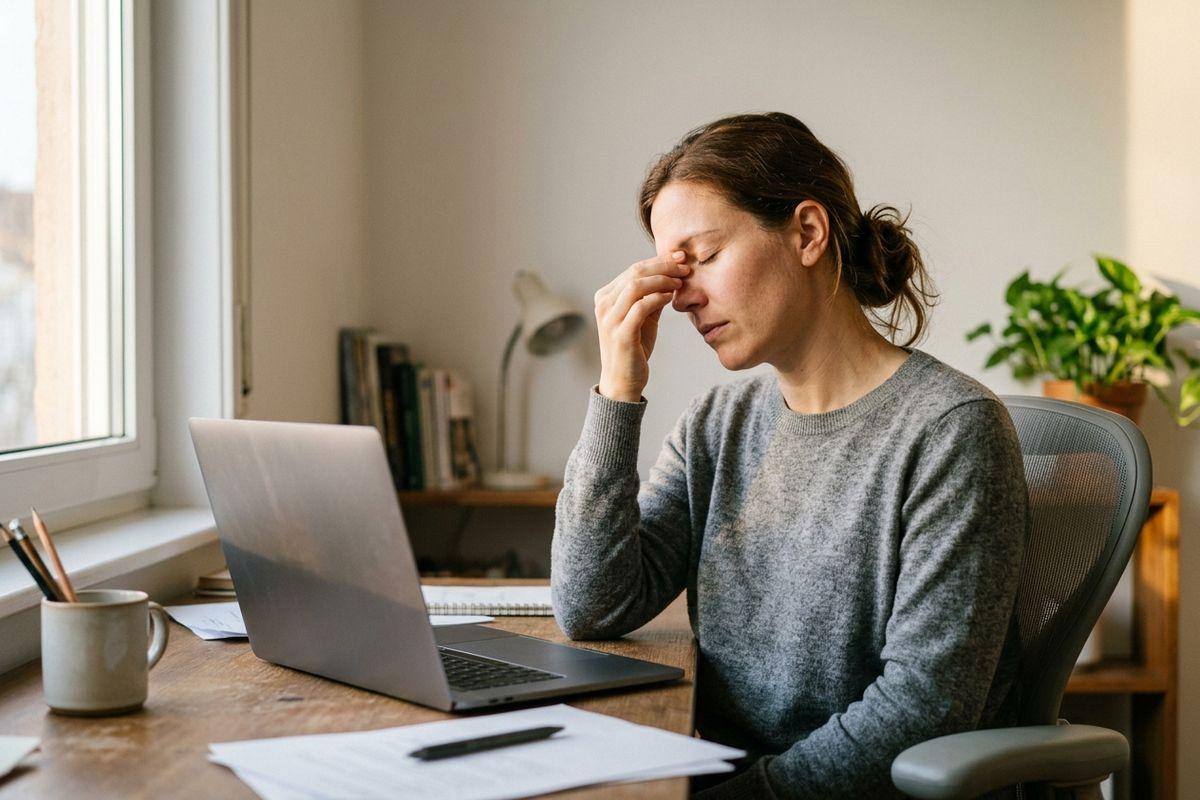
Eye strain builds when your eyes hold focus for long stretches without a break. Screens are the usual culprit. A sewing project can do it too, or a long drive at dusk, when your eyes work harder to pick out detail in low light.
It creeps up on you. You might not notice until you glance across the room and everything takes a second to sharpen. Hours of close screen work are linked to digital eye strain, a group of eye and vision problems tied to device use.
Signs to Watch For
The discomfort rarely stays in your eyes alone. Watch for a few of these showing up together:
- Sore, gritty, or watery eyes
- Blurry vision that clears when you look away
- Sensitivity to bright light
- Headaches across your forehead or temples
- Aching through your neck and shoulders
How Long Eye Strain Usually Lasts
Most people feel better after stepping away from the screen for 20 minutes. Your focusing muscles relax, the ache fades, and by dinner you’ve forgotten about it.
If you don’t change anything about your day, though, the strain can stretch across a week or more. Same chair, same screen distance, and your eyes start each morning already tired.
What Makes Eye Strain Stick Around
Hours on a screen without breaks cause the most trouble. Lighting matters too. A room that’s too dim makes your eyes strain to see contrast, and a bright window behind you puts glare straight onto the screen.
Posture adds to it. A laptop propped on a kitchen table pulls your head forward, and the neck tension that follows can make the whole thing feel worse than it is.
Dry air is a quieter factor. Heating and air conditioning both pull moisture out of a room, which can make your tears evaporate faster than they should. Dry eyes are tired eyes, but a dry eye assessment can help tell the two apart.
Vision Issues Behind Lasting Strain
Sometimes tired eyes point to something an eye exam can identify. An uncorrected prescription forces your eyes to work harder to hold a clear image, whether that’s nearsightedness, farsightedness, astigmatism, or presbyopia.
A small focusing error rarely bothers you across a room. Up close and over 8 hours, that extra effort can turn into a headache by late afternoon.
How to Ease Eye Strain at Home
A few habits can help soothe the strain before your appointment:
- Follow the 20-20-20 rule by looking at something 20 feet away for 20 seconds every 20 minutes
- Set your screen about an arm’s length away and slightly below eye level
- Remind yourself to blink on purpose when you notice yourself staring
- Reach for lubricating drops when your eyes feel dry
Small Workspace Changes
Move your monitor away from windows to cut glare, and match your screen brightness to the room around you. A humidifier can help your eyes get through winter, when indoor heating dries the air enough to leave your eyes stinging.
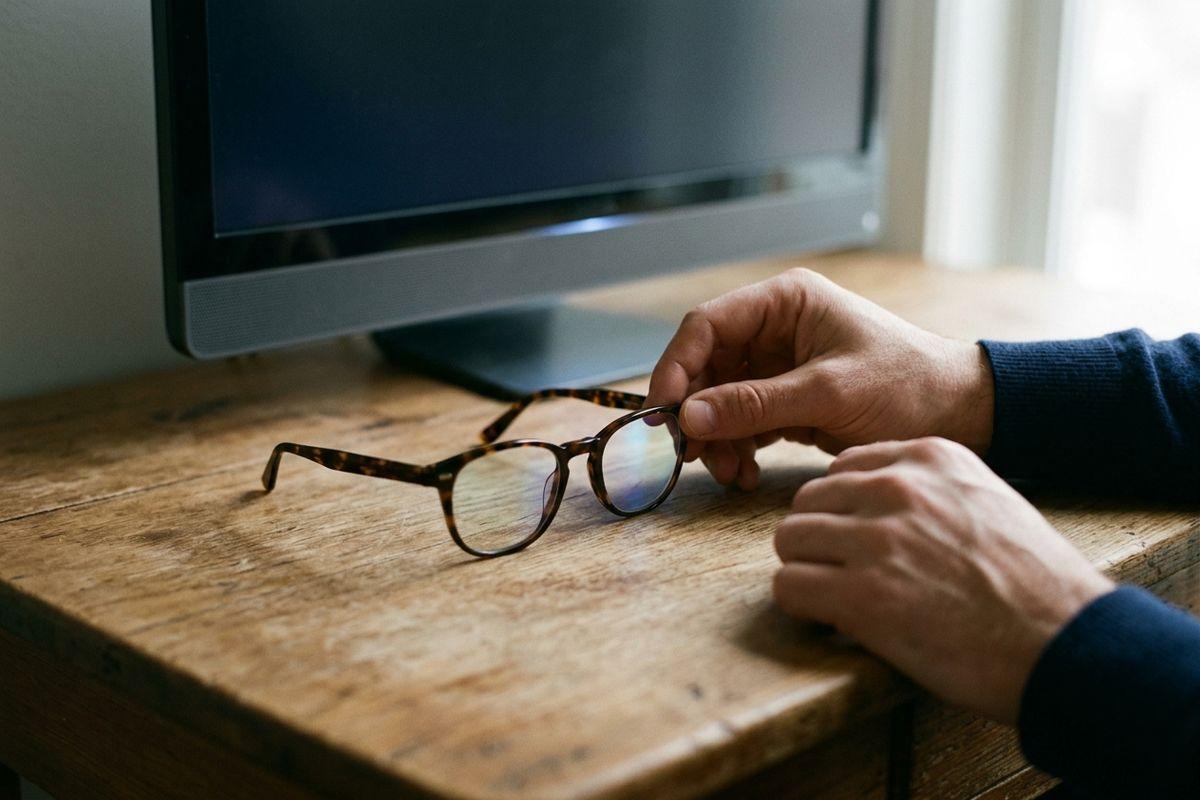
Lenses made for screen distance could be worth asking about, and the frames and lenses range includes options built for desk work.
When to Book an Exam
Book an exam if symptoms linger past a few days. The same goes for discomfort that keeps building even with regular breaks, or blurry vision that comes with headaches. Sudden changes such as new floaters or eye pain need urgent eye care right away.
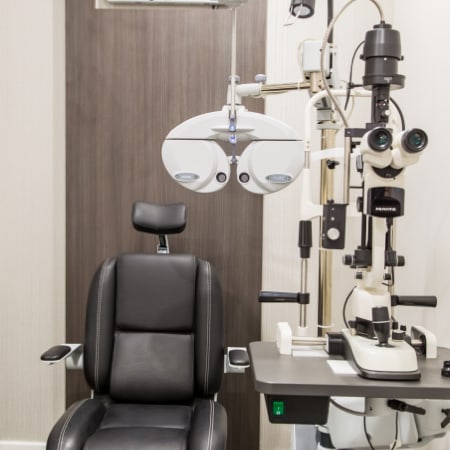
An optometrist reviews your prescription and measures how well your eyes focus and work together up close. If you wear contacts, the fit gets assessed during a contact lens exam, since a lens that dries out by mid-afternoon can feel a lot like strain.
Dryness gets tested separately. And for kids whose distance vision is changing, myopia control may come up in the same visit.
Find Out Why Your Eyes Are Tired
Eye strain that keeps returning every afternoon usually has a reason, and an exam helps you find out whether it’s your prescription, your tear film, or your desk setup.
Forest City Optometry can measure how your eyes handle close work, check for dryness, and talk through lens options for the hours you spend on screens. Book your eye exam online and stop guessing at what’s tiring your eyes.