

Nearsightedness and farsightedness get mixed up constantly, and it’s easy to see why. Both are refractive errors, which is the term for an eye that doesn’t bend light the way it needs to for a sharp image.
The difference comes down to where that light lands. A nearsighted eye focuses it in front of the retina and makes distance blurry, while a farsighted eye focuses it behind the retina and makes close-up work harder.
Figuring out which one you have is a standard part of an adult and senior eye exam. And children’s eye exams answer the same question for kids who’ve never thought to say anything.
What Nearsightedness and Farsightedness Mean
Both conditions stem from the same basic problem, but in opposite directions. With nearsightedness, the eyeball tends to be slightly long from front to back, so light comes to a focus before it reaches the retina. A book stays sharp while the whiteboard across the room turns fuzzy.
Farsightedness runs the other way. The eye is often a little shorter than average, light focuses past the retina, and close-up tasks take more effort than they should. Distance vision may stay reasonably clear.
Neither one is a disease. Your eyes are shaped in a way that needs some help, and that’s the extent of it.
Signs You Might Be Nearsighted
The most noticeable sign of nearsightedness is blurry distance vision. Beyond that, watch for:
- Squinting at road signs or anything more than a few metres away
- Headaches after a long drive
- Eye strain when you watch a screen from across the room
- Sitting close to the TV without noticing you’ve done it
Kids don’t always speak up about any of this. A teacher noticing a student copying notes from a neighbour is a common way nearsightedness gets spotted.
Signs You Might Be Farsighted
Farsightedness often shows up first with close work. Common signs include:
- Blurriness when you read, write, or look at your phone
- A burning or aching feeling in the eyes during detailed tasks
- Headaches that build after 20 or 30 minutes of reading
Mild farsightedness can go unnoticed for years, because the focusing muscles inside the eye compensate on their own. That extra effort often causes the strain in the first place.
When Nearsightedness and Farsightedness Develop
Nearsightedness usually turns up during the school years and tends to progress through adolescence before stabilizing around age 20. Vision often changes as kids grow, so a prescription at age 12 may not hold at 15.
Farsightedness works on a different schedule. It’s frequently present at birth, and plenty of children grow out of it as their eyes lengthen. It can also carry into adulthood or become more noticeable later on, particularly once reading starts to feel like work.
How to Read Your Glasses Prescription
Your prescription tells you what you need. A minus sign, like -1.00, means nearsighted. A plus sign, like +1.25, means farsighted.
The number measures how much correction your eyes need. Higher numbers call for a stronger lens, which says nothing about the health of the eye itself.
Vision Correction Choices
There’s more than one way to address a refractive error. The right choice depends on your prescription, your age, and what your days actually look like. Here’s what you’ll usually choose from:
- Prescription glasses, including progressive lenses if you need clear vision at more than one distance
- Contact lenses, which call for a contact lens exam on top of your regular appointment
- A laser eye surgery consultation if you’d rather look into a longer-term option
- Myopia control for children whose nearsightedness keeps progressing, which may slow how quickly it advances
Talk the options through with your optometrist. Someone doing close detail work all day may need something different from a person who spends the week outdoors, and that conversation is worth having before you pick frames.
Why Eye Exams Matter for Refractive Errors
Refractive errors can go unnoticed for a long time. A child with blurry vision has no reference point for clear vision, so they assume everyone sees the world the way they do. Adults tend to blame eye strain on a busy week and move on.
Book exams on a regular schedule and you give your optometrist a chance to find changes early, while they’re still small. Bring your current glasses with you when you do. Comparing what you’re wearing now against what you need can make the appointment go faster.
Find Out Which One You’re Dealing With
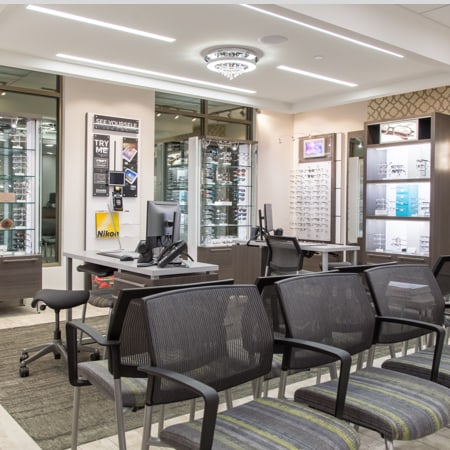
Nearsighted or farsighted, knowing which one you have changes what comes next. Forest City Optometry cares for families at every stage, and our optical boutique carries frames, lenses, and sunglasses once you have a prescription in hand.
Book an eye exam and get a clear answer about your vision.