
A wall of frames can be a lot to take in, especially when you’re shopping for someone who’s still growing. Shapes, colours, materials, sizes. Very little of it tells you what will survive a school year. Plenty of parents reach the optical boutique straight from a children’s eye exam with a prescription in hand and no obvious place to begin.
Start with how the frame sits on your child’s face, check that the materials can handle daily wear, then match the lenses to how your child spends their time. Work in that order and the options narrow fast.
Why the Right Fit Matters for Your Child’s Vision
A frame that doesn’t fit correctly can move the lenses away from where they need to sit in front of your child’s eyes. When that happens, even an accurate prescription can leave your child squinting or struggling to see clearly.
Comfort plays an equally big role. A pair that pinches, slides, or digs behind the ears is one your child will take off the moment you’re not looking. Getting the fit right from the start means they’re more likely to keep the glasses on throughout the school day.
Keep the prescription current, too. Kids’ eyes can change fast, and plenty of children show no obvious signs that their vision has changed since the last exam.
Frame Materials That Hold Up to Daily Wear
Kids are hard on their glasses. Frames get dropped, pulled off one-handed, crushed at the bottom of a backpack, and stepped on.
Ask about flexible or rubberized frames if any of that sounds familiar. Spring hinges can absorb some of the bending that would otherwise snap a temple arm.
Bring up sensitive skin before your child starts trying frames on. Some materials irritate the skin where they sit, and metal sensitivities turn up often enough that opticians expect the question.
How to Tell If Kids’ Glasses Fit Properly
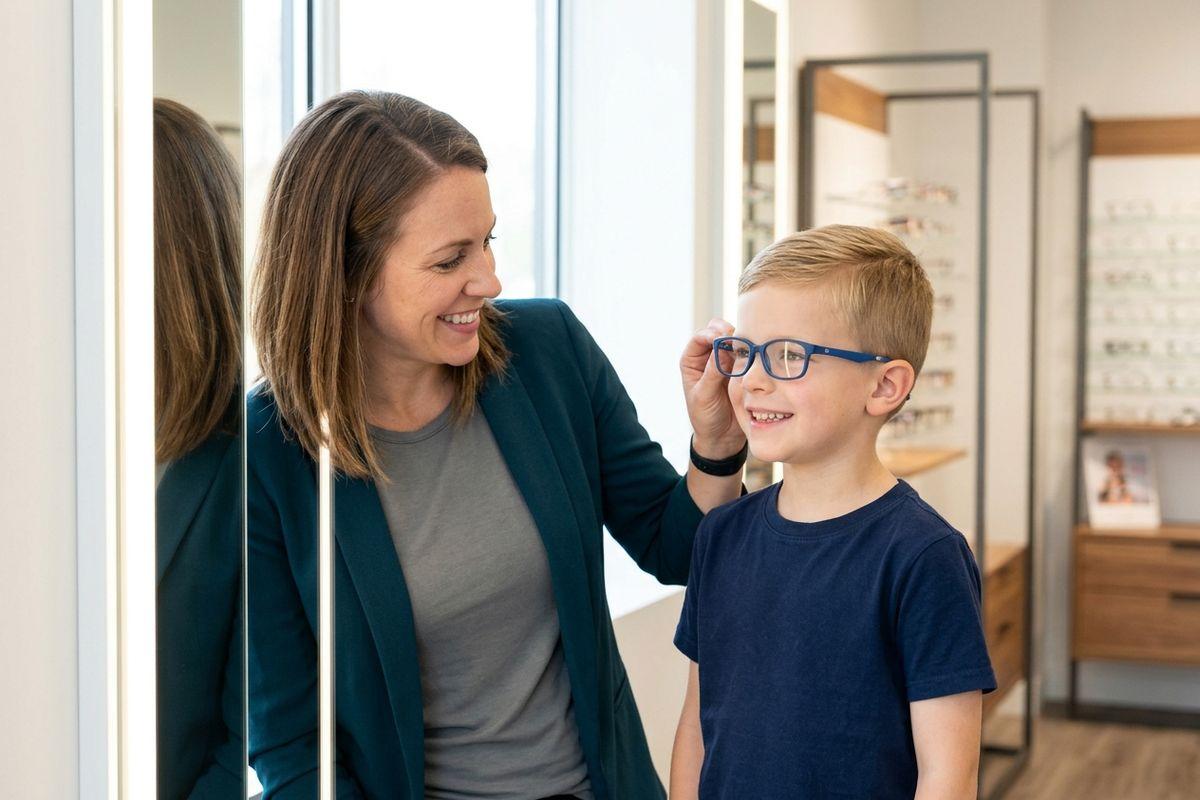
Frame width should match your child’s face so the lenses sit centred in front of their eyes. A frame that overhangs the temples will slide all day.
Look at cable temples for younger kids and anyone who plays hard at recess. These wrap around the back of the ear rather than resting on top, which keeps the frame from bouncing off mid-game.
Pay attention to the bridge as well. Younger children often have a small, flat nose bridge carrying most of the frame’s weight, so that contact point needs an experienced fitter’s eye.
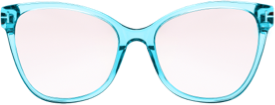
Narrowing down which frame shapes suit your child’s face before the appointment can save everyone some time at the display.
Lens Options Worth Knowing About
Everyday Lens Types
Polycarbonate and Trivex lenses are two options commonly recommended for kids. Both are lightweight and more impact-resistant than standard plastic lenses, which makes them a practical choice for children who play sports or spend a lot of time outdoors.
A scratch-resistant coating can extend the life of the lenses. Kids put their glasses down on all kinds of surfaces, and even a small scratch can affect how well they see through the lens.
An anti-reflective coating is another option worth considering, particularly if your child spends time in front of screens or in brightly lit classrooms.
Specialty Lens Choices
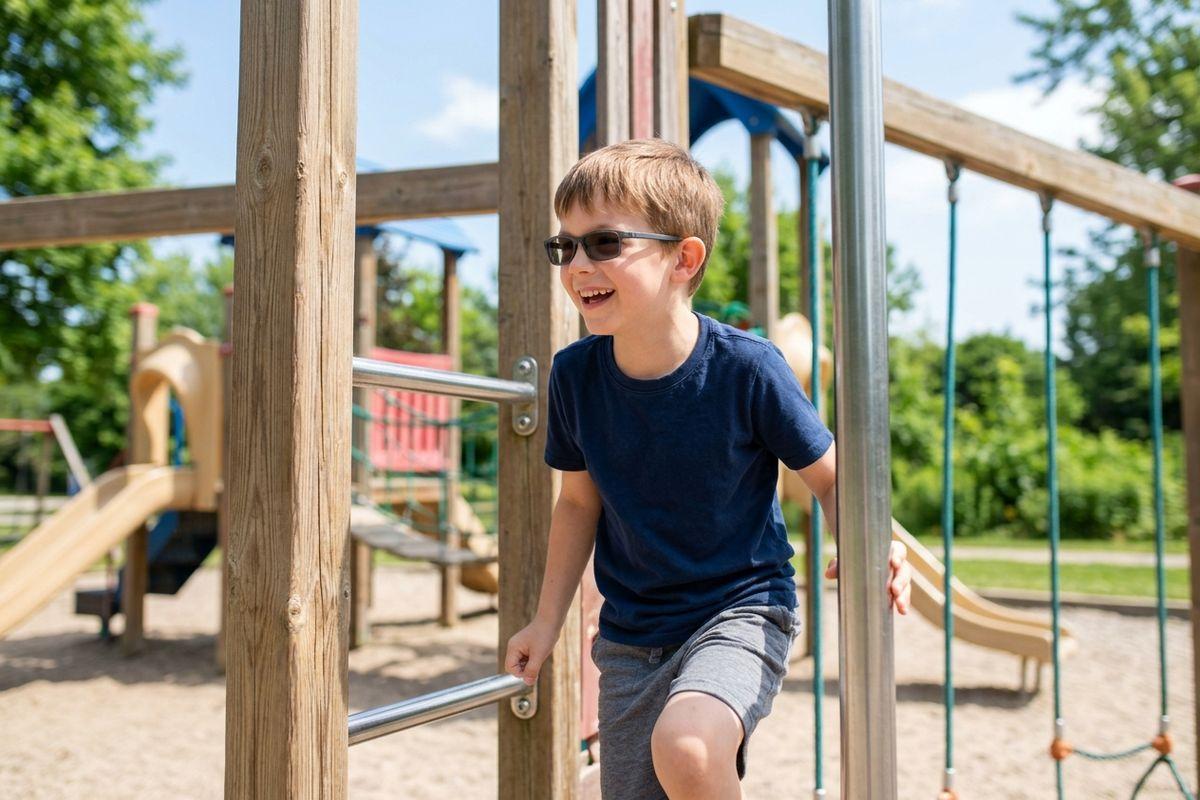
Photochromic lenses tint in sunlight and clear again indoors. For a kid who’s in and out all day, that can take the place of a second pair of sunglasses.
Parents ask about blue light filtering constantly. If your child spends hours on a tablet, ask your optometrist whether a filter would help, or whether adjusting a few screen habits would do more.
Helping Your Child Feel Good About Wearing Glasses
Glasses become part of how your child sees themselves. Giving them a say in what the frames look like goes a long way toward making them feel confident rather than reluctant about wearing a pair. Browsing frames and lenses together ahead of time can help your child arrive at the appointment with a style direction in mind.
A few practical things can make the shopping experience go more smoothly. Shopping when your child is rested, rather than right after an eye exam when they may be tired or overstimulated, usually makes the process easier for everyone. For first-time wearers, building up wear time gradually over a few days helps them adjust without it feeling like too much at once.
Questions to Ask Before You Leave the Optical Boutique
Spend a few extra minutes with the optical team after the fitting. Run through these before you head out:
- Ask what the warranty covers, since breakage and scratching happen more with kids’ pairs.
- Check how to clean the coatings, because some need specific products.
- Consider a backup pair if the prescription is strong.
- Show your child how to take the glasses off with both hands and set them down lens-side up.
- Book the next eye exam while you’re still standing at the desk.
Find a Pair Your Child Will Actually Wear
Good glasses disappear into a kid’s day. They stay put at recess and stop being something your child thinks about.
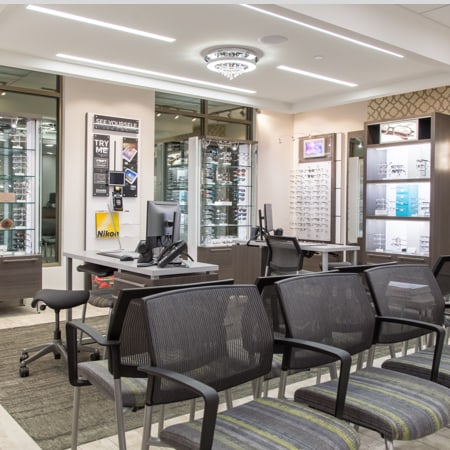
Forest City Optometry offers children’s eye exams alongside an optical boutique stocked with frames made for daily wear. Book an appointment and find a pair that suits your child’s face and their week.