

Blue light glasses turn up in pharmacy aisles, in online ads, and in a lot of questions from people who spend the workday staring at a monitor. The pitch rarely changes. Fewer headaches, less strain, easier sleep. But do they work?
Blue light glasses may feel comfortable for some people, especially in the evening, but current research doesn’t show they reduce digital eye strain, so they’re a personal choice rather than a standard recommendation. If your eyes still ache once the laptop closes, book a comprehensive eye exam to find out what’s behind it.
What Blue Light Is and Where It Comes From
Blue light is one part of the visible light spectrum, the range of light your eyes can see. It isn’t new or unusual.
The sun is your main source of it. LED bulbs in your kitchen, your car dashboard, your laptop, and your phone give off blue light too, though in far smaller amounts than a bright afternoon outdoors.
Screens often get blamed because of how you use them. You hold a phone close to your face and settle in front of a monitor for 8 hours. Long stretches of close, unbroken focus tire your eyes out, even though the amount of blue light involved stays small.
When you’re outdoors, UV exposure deserves more of your attention. Wear sunglasses with proper UV protection on bright days, and on overcast ones too.
What Blue Light Glasses Actually Do
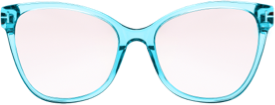
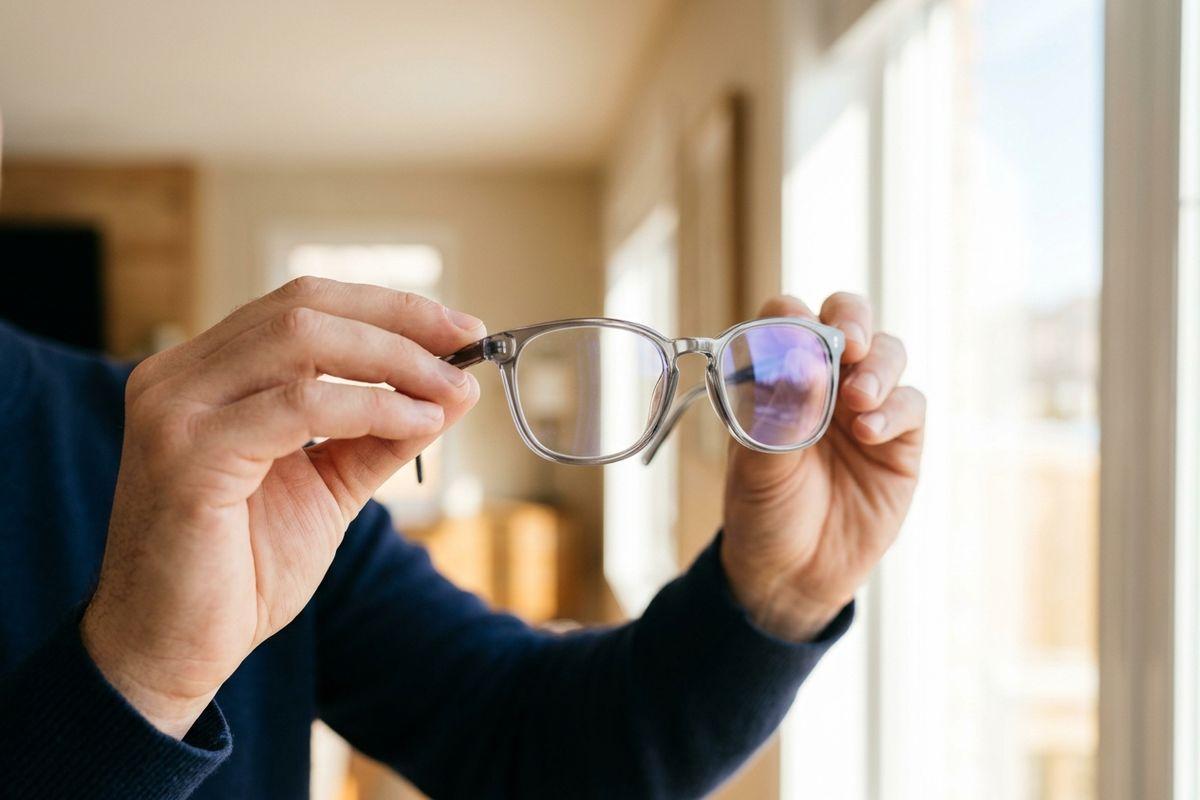
These lenses filter some blue light before it reaches your eyes. They don’t block all of it.
Some are clear and look like any other pair of glasses. Others carry an amber or yellow tint, which filters more but changes how colours look on screen, and that trade-off matters if you edit photos or work with colour all day.
Can a Filter Be Added to Your Current Lenses?
Yes. A blue light filtering coating can be paired with prescription glasses, including progressive lenses, so one pair handles your reading, screen, and distance vision.
Ask about the coating while you’re choosing frames. The coating gets picked at the same time as your lenses, and your optometrist can walk you through what a given option will and won’t do.
What the Research Says So Far
The findings are mixed, and studies are still underway. A review of 17 randomized trials found blue light filtering lenses probably make no difference in eye strain from computer work, and no evidence showed they protect the retina.
Side effects were mild in that review, and they showed up just as often in people wearing ordinary lenses.
There’s also no proof that screen use damages your eyes. The blue light reaching you from a monitor is a small fraction of what you get from daylight.
Where some people do notice a difference is sleep. Cutting back on blue light in the evening, whether through lenses or screen settings, can leave some people feeling more ready for bed.
Do Eye Doctors Recommend Them?
Blue light glasses aren’t a standard recommendation for digital eye strain. If you’ve tried a pair and you like how your eyes feel at the end of the day, that preference counts for something.
Filtering strength varies quite a bit between brands, and packaging claims don’t always match what the lens does.
They can’t replace routine eye exams. An uncorrected prescription or dry eye can create the same tired, blurry feeling you’re blaming on your monitor.
What’s Actually Tiring Your Eyes Out
You blink less when you’re focused on a screen, sometimes by half. Fewer blinks means the thin layer of tears that keeps your eyes comfortable dries out faster. Add glare bouncing off the display, plus the close focusing distance your eye muscles hold for hours, and discomfort builds.
Your setup plays a part too. A monitor sitting too high, a dim room paired with a bright display, or a chair that makes you crane forward can leave your eyes aching by the end of the day.
Here’s what digital eye strain tends to feel like after a long stretch at the computer:
- Dry or irritated eyes
- Headaches
- Blurred vision after screen use
- Trouble refocusing when you look up from the screen
- Aching neck or shoulders
Simple Habits for Screen Comfort
Small adjustments to your day often do more for your comfort than a new lens.
Follow the 20-20-20 rule. Every 20 minutes, look at something roughly 20 feet away for 20 seconds. Your focusing muscles get a short break, and you’ll blink more while you’re at it.
Set your screen about 25 inches from your face, slightly below eye level so your gaze angles downward. Turn on night mode an hour before bed. Reach for artificial tears when your eyes feel dry.
Check your lighting as well. Position the monitor so windows and overhead fixtures don’t reflect off the glass.
Still Wondering If a Pair Is Right for You?
Tired eyes usually have a cause, and blue light may not be it. If yours stay dry, sore, or blurry hours after you’ve closed the laptop, screen habits probably aren’t the whole story, and an exam answers that faster than guessing in the pharmacy aisle.
Forest City Optometry can check what’s actually behind the discomfort, from an uncorrected prescription to dry eye, and go over blue light coatings if you still want a pair. Book an appointment to talk through your screen habits and lens options, or call for same-day urgent eye care when something can’t wait.