
If you’re thinking about switching from glasses to contact lenses, you might assume your current prescription is all you need. However, contacts require a special evaluation by an optometrist involving more than just a standard vision test.
A contact lens fitting is a specific exam to check that your lenses fit your eyes correctly for clear vision and comfort. Since contacts sit directly on your eyes, the process involves precise measurements and a detailed assessment to find the right lens material, size, and shape for you.
Why You Need a Special Exam for Contact Lenses
While they both correct your vision, an eyeglass prescription is not the same as one for contact lenses. Because a contact lens rests on the surface of your eye, it needs its own unique prescription and fitting. This dedicated exam, different from a basic sight test, helps confirm the lens fits the curve of your eye and moves correctly when you blink.
Glasses & Contact Lens Prescriptions
A glasses prescription measures what it takes to correct your vision from a short distance away. A contact lens prescription includes extra details that are important for a comfortable and healthy fit. These details often include:
- The base curve: the curvature of the contact lens.
- The diameter: the size of the contact lens.
- The specific lens brand and material recommended for your eyes.
What to Expect at Your Contact Lens Exam
A contact lens exam is a multi-step process designed for your specific needs. An optometrist evaluates your eyes to determine the right lens type for your vision and lifestyle. This is a key part of personalized vision care.
A Talk About Your Eyes & Lifestyle
First, the doctor talks with you about your daily life and vision goals. This conversation helps them recommend the right type of contacts. You might discuss how often you plan to wear contacts, your work environment, or hobbies like sports that might affect your choice.
Precise Measurements of Your Eyes
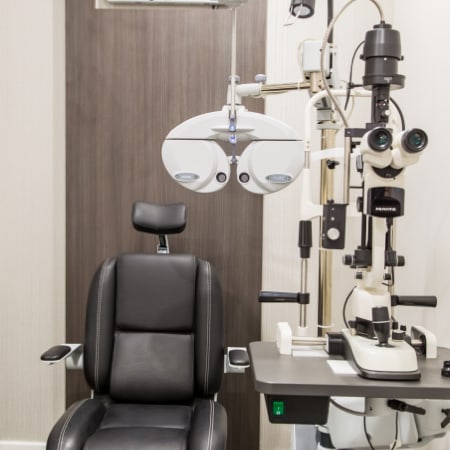
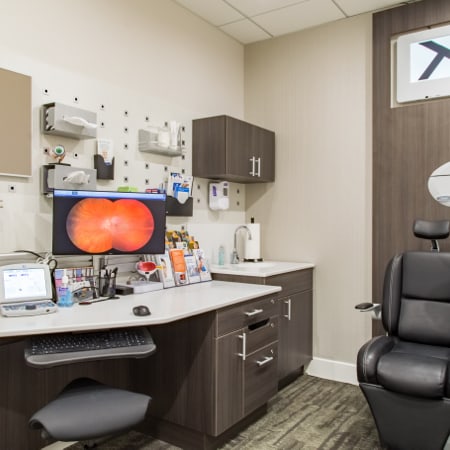
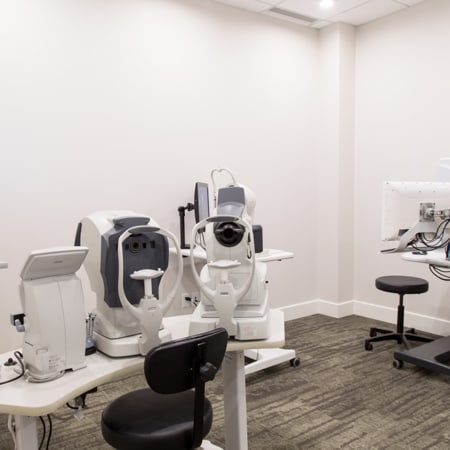
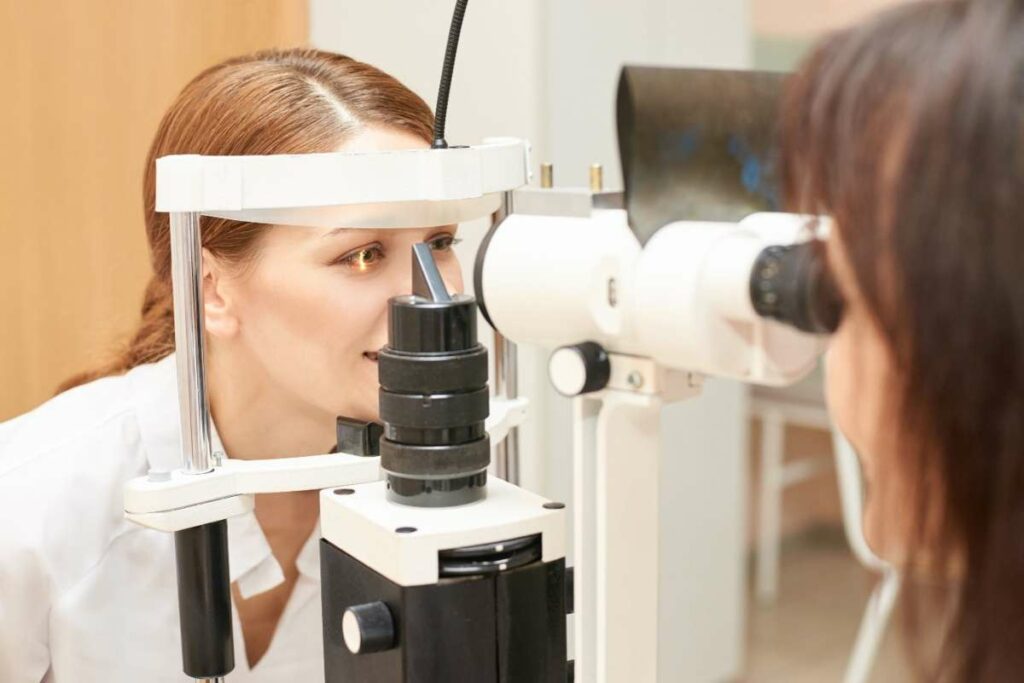
Next, the optometrist takes detailed measurements of your eyes using specific diagnostic tools. These measurements are quick and comfortable. They sometimes include a corneal curvature map to assess the shape of your cornea, which is typically used in cases involving dry eye concerns or specialty lenses such as scleral lenses or ortho-k. A tear film evaluation may also be performed to help determine the best lens option for your comfort and vision.
Find the Right Lens Type & Fit
After the measurements are complete, the fitting process begins. This is where you get to try on lenses and learn how to use them. It is an important step in any contact lens exam, whether for a child or an adult.
Try a Pair of Trial Lenses
Based on your exam, the optometrist gives you a trial pair of contacts to wear. They check the fit, your comfort level, and how well you can see. The lens should move naturally with your eye without causing irritation, giving you clear and stable vision.
Learn How to Handle Your Lenses
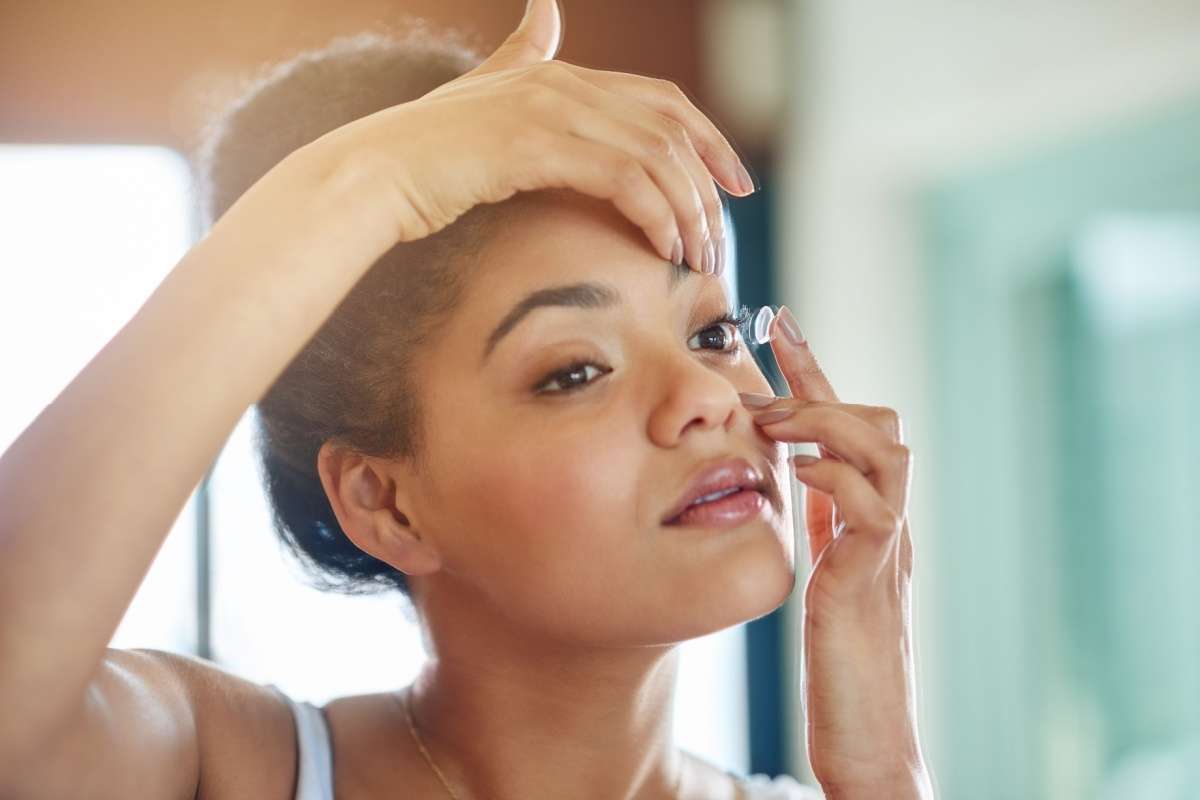
If you are new to contacts, the team shows you how to put them in and take them out safely. You also get clear instructions for cleaning and storing your lenses to keep your eyes healthy. This hands-on training helps you get comfortable from day one.
Options for Every Need
Many types of contact lenses are available to suit your needs, from daily disposables to bi-weekly or monthly options. The right choice often depends on your lifestyle and how often you plan to wear them. Your optometrist can discuss the pros and cons of each to help you find a comfortable routine.
If you have a condition like astigmatism or need different prescriptions for near and far vision, specialty lenses can help. For example, toric lenses are designed for the unique shape of an eye with astigmatism. Multifocal contacts are another option, working much like progressive lenses to give you clear vision at different distances.
The Follow-Up Visit & Your Final Prescription
Finding the right contact lenses sometimes takes more than one visit. A follow-up appointment helps confirm your new lenses are working well for you over time. This ongoing support is a part of the personalized vision care you can expect.
You wear your trial lenses for a set period (usually a few days) before returning. At the follow-up, the doctor checks your vision and comfort again. If everything looks good, they finalize your prescription. If not, you may try a different brand or type of lens.
Care for Your Contact Lenses & Eyes
Proper hygiene is key to wearing contact lenses safely. Following a few simple rules can help protect your eyes from irritation. This care routine quickly becomes a normal part of your day.
Your Daily Care Routine
Always remember these key steps for reusable lenses:
- Wash and dry your hands before touching your lenses or eyes.
- Use only the cleaning solution your optometrist recommends.
- Use fresh solution every time—never top off old solution.
- Clean your case regularly and replace it every three months.
Following these steps helps keep your eyes healthy, as improper care can lead to issues. It’s also important to remember that contact lenses do expire and should not be used past their recommended date.
Get Started with Your Contact Lens Fitting
A proper contact lens fitting goes beyond a simple prescription to provide a comfortable and effective solution for your vision. With precise measurements, personalized recommendations, and ongoing support, you can enjoy the freedom and clarity that contact lenses provide.
Ready to explore contact lenses? The team at Forest City Optometry provides comprehensive contact lens exams and fittings tailored to your unique needs and lifestyle.
Book your appointment online today at our London location, conveniently located just north of Huron on Adelaide between Huron & Kipps Lane.